Women play a vital role in rural economic development and agriculture. They participate throughout the farm process, with the majority of Nigeria's agricultural production coming from small-holder rural women. According to AgroNigeria, women comprise 43% of the world's agricultural labour force — rising to 70% in some countries.
However, female farmers encounter significant obstacles that male counterparts typically avoid: limited land ownership, restricted access to financing, marginalisation within the agricultural value chain, and barriers to farm mechanisation. Many acquire land through rental arrangements or family connections rather than direct purchase.
Most women rely on manual labour for farming activities. In Nigeria, roughly 90 percent of non-mechanised farming depends on human labour. Farm mechanisation offers a more efficient alternative, yet most equipment has been designed primarily for male users.
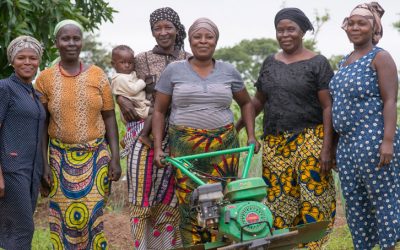
Non-governmental organisations and civil society groups are working to expand women's access to mechanisation. TOHFAN and Propcom Maikarfi, for example, have trained booking and hiring agents, intentionally recruiting female candidates to narrow the gender gap. Power tillers offer machinery better suited to women's needs, and many pool resources collectively to purchase or rent equipment and share usage across their farms.